
Smart Rental Homes in India: Reshaping the Modern Rental Experience
How smart home technology is reshaping the Indian rental market. Learn about smart locks, energy savers, water monitors, and the security vs. privacy balance.
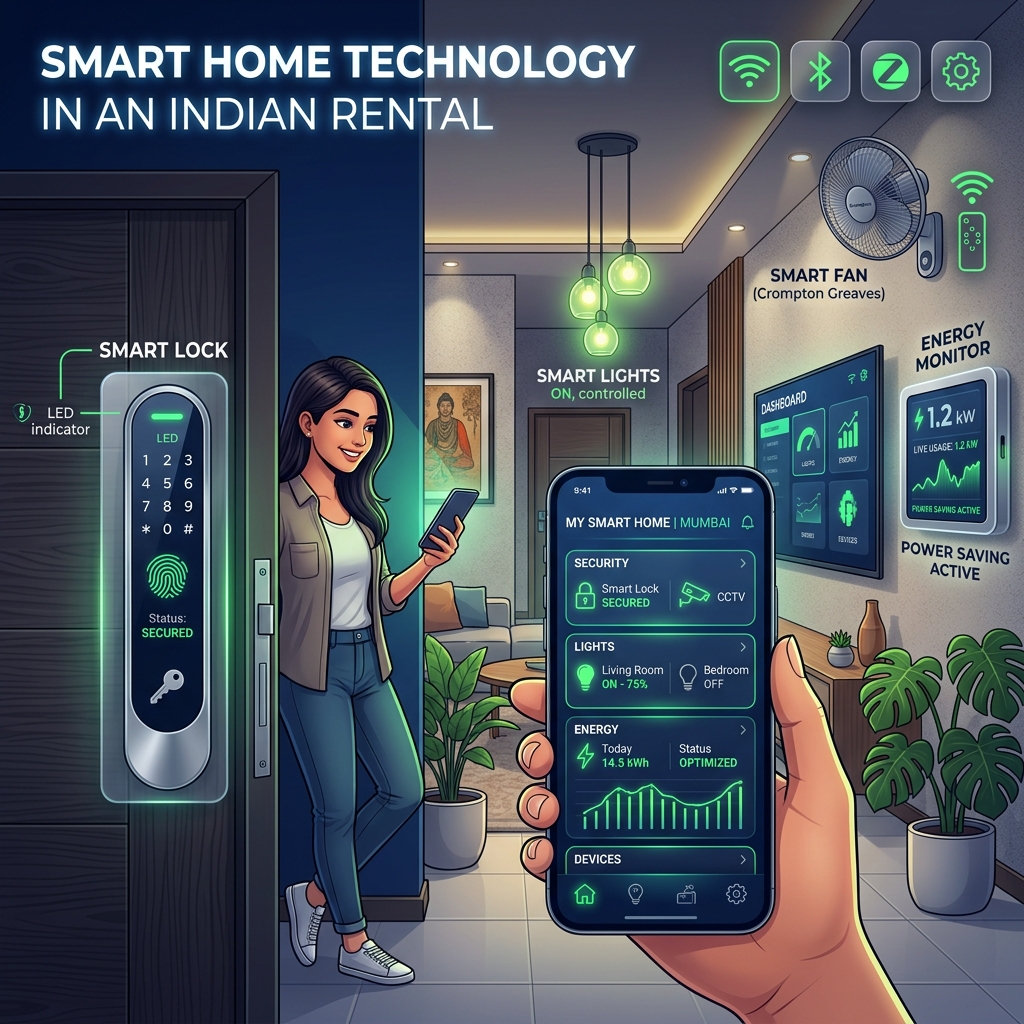
Smart Rental Homes in India: Reshaping the Modern Rental Experience
The concept of a "Smart Home" in India has transitioned rapidly from a futuristic luxury to an affordable everyday standard. Enabled by the rise of high-speed fiber internet and affordable Internet of Things (IoT) devices, modern tenants—especially tech-savvy Gen Z and millennial renters—now actively look for smart home integrations when choosing a property.
For landlords, converting a standard apartment into a smart rental home is no longer just a gimmick. It is a strategic upgrade that commands premium rents, reduces property maintenance overheads, and attracts high-quality, long-term tenants.
In this guide, we explore the most popular smart home technologies for rentals in India, the benefits they offer to landlords and tenants, and how to maintain the crucial balance between property security and tenant privacy.
4 Essential Smart Tech Upgrades for Indian Rentals
Here are the most practical and high-impact smart home devices being installed in Indian rental properties:
1. Smart Digital Locks
Traditional brass padlocks and keys are becoming obsolete. Smart digital locks (from brands like Yale, Godrej, or Luminous) allow keyless entry using:
- Passcodes or PINs
- Fingerprint scanners
- RFID cards
- Mobile app access (allowing landlords to issue temporary digital access keys to maintenance staff or prospective tenants).
2. Smart Lighting & Appliance Control
Smart plugs and switches (from brands like Wipro, TP-Link, or Tata Power) allow users to control heavy appliances like air conditioners, geysers, and water pumps remotely.
- Energy Savings: Schedule geysers to turn off automatically after 20 minutes, preventing heavy electricity bills.
- Convenience: Turn on the living room AC 10 minutes before reaching home during harsh Indian summers.
3. Smart Water & Gas Leak Detectors
Water leakage and gas leaks are major hazards in Indian apartments. Smart sensors placed near washing machines, kitchens, and bathrooms can send instant alerts to the tenant's smartphone the moment a leak is detected.
- Preventing structural damage to the property (molds, damp walls, ruined woodwork).
4. Smart Energy Monitors
Smart meters or sub-meters integrated with the main electrical panel provide real-time tracking of electricity usage. It helps tenants understand which appliances are consuming the most power and estimate their electricity bills.
The Value Proposition: Landlords vs. Tenants
Why both parties win when a property goes smart:
| Focus Area | Landlord Benefits | Tenant Benefits |
|---|---|---|
| Rent Yield & Valuation | Command 8-15% higher rent compared to non-smart houses. | Enjoy modern, convenient living with high-end tech. |
| Security & Access | Remote access for visits; easily revoke keycodes when tenants change. | Keyless entry; no risk of losing physical keys or unauthorized duplicate keys. |
| Property Protection | Instant alerts for dampness, water leaks, or electrical hazards. | Safer environment with gas leakage and short-circuit alarms. |
| Utility Bills | Reduced wear and tear on heavy electrical systems. | Lower electricity bills via automated scheduling. |
The Security vs. Privacy Balance
While smart security cameras and devices offer peace of mind, they can easily trigger tenant anxiety regarding privacy. As a landlord, you must follow ethical and legal guidelines:
- Outdoor Cameras Only: Smart security cameras (like Ring or Mi Security) should only be installed at the main entrance door, driveway, or external balcony. Installing cameras inside the living area, bedrooms, or private corridors is a severe violation of the tenant’s right to privacy and is illegal under the Information Technology Act.
- Consent and Transparency: Document the presence of all smart devices and active external security cameras in your written lease agreement. For guidelines on drafting these clauses, check out our Model Tenancy Act Guide.
- Data Control Transfer: Upon move-in, transfer control of smart hubs, lighting accounts, and digital lock access codes to the tenant. The landlord should not retain master control codes or monitor internal device activity during the tenancy period.
How Maakan Integrates with Modern PropTech
Managing a smart rental home shouldn't involve jumping between ten different apps. Maakan is building a unified rental management ecosystem that supports PropTech automation:
- Digital Keys Handover: Coordinate smart lock passcode transfers directly through the Maakan onboarding portal upon signing your lease. Refer to our How Maakan Works Platform Guide to see how the system coordinates.
- Integrated Maintenance Tickets: Take photos of any faulty smart switches or appliance errors and log a maintenance request immediately. Review our Move-In/Move-Out Checklist Guide for logging electrical statuses.
- Online Bills Settle: Fetch and settle electricity, water, and building maintenance bills directly inside your tenant dashboard, keeping an exact digital receipt of all expenses.
Frequently Asked Questions (FAQ)
Q: Who pays for the Wi-Fi connection required for smart devices?
Typically, the tenant pays for the internet connection as they are the primary user of the smart home system. However, if the landlord has installed smart leak sensors or entry locks that require constant connectivity for property safety, the landlord may choose to include a basic broadband connection in the rent.
Q: What happens if there is a power cut or internet outage?
Most modern smart locks run on independent AA batteries (which last 1-2 years and send low-battery alerts) and can be opened with a physical backup key or a 9V battery jump-start port on the outside. Smart switches act as normal manual switches when the internet is down.
Q: Are smart home upgrades deductible under income tax?
No. General home upgrades like smart bulbs, automated switches, or smart locks are not directly tax-deductible. However, if they are part of a major structural renovation or purchase price of a let-out property, the interest on loans taken for such upgrades can be claimed under Section 24(b). Read our Landlord Taxation Guide for calculation examples.
Step into the future of renting. Whether you want to list a smart rental home or find a tech-enabled apartment, Maakan makes property renting seamless, secure, and modern. List your property today!
Ready to Find Your Rental?
Start your no-broker rental journey across India today.